Cliff Booth
Once Upon a Time in HollywoodCliff Booth is Rick Dalton’s stunt double turned driver and gofer, a decorated World War II veteran whose unflappable competence is inseparable from a concealed history of killing. He is both the person Rick relies on to keep his working life moving and a man whose violence has repeatedly escaped public consequence. That double identity shapes his friendship with Rick, his standing among stuntmen, and the uneasy calm with which he handles danger.
Identity and Background
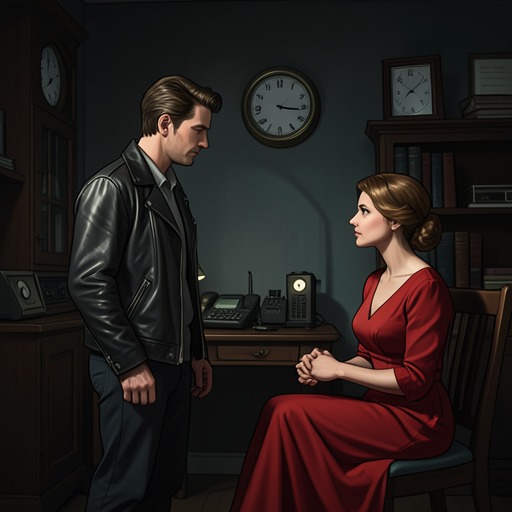
At forty-six, Cliff sits in the William Morris Agency waiting room in a biker outfit left over from a low-budget film. Three years earlier, Tom Laughlin had hired him to double biker characters in The Born Losers, a motorcycle picture for American International Pictures. The clothes are a reminder that his work has carried him through an entertainment industry whose opportunities, like Rick’s, can shift abruptly.
Before Hollywood, Cliff’s life was shaped by World War II. He fought in Sicily and later alongside Filipino guerrillas in the Philippines. After capture by Japanese forces, he led fellow prisoners in a daring escape from their makeshift jungle camp; they overthrew their captors, escaped into the jungle, and rejoined the resistance. Cliff left the military with two Medals of Valor. His confirmed kills of Japanese soldiers made him one of the war’s most lethal American servicemen in the Pacific, while the number of unconfirmed kills attributed to him by his Filipino resistance comrades was unknown.
The escape became the basis for Battle of the Coral Sea, directed by Paul Wendkos and released by Columbia Pictures. The film transformed Cliff’s experience into a fictionalized submarine adventure, with Cliff Robertson playing the American leader; Rick Dalton had appeared as one of that character’s men before he and Cliff became a team. The distance between Cliff’s actual war and its screen version is characteristic of his place in Hollywood: his real history is extraordinary, but the industry can recast it as someone else’s story.
A Career Bound to Rick Dalton
Cliff joined Bounty Law during its third season, in 1961–62, to double Rick. Rick initially resented how handsome the new stuntman was, fearing that Cliff would draw attention in a costume that made him look better than the show’s star. That response changed when Rick learned of Cliff’s military record. He admired men who had served with distinction, despite having been so determined to avoid military service himself that he would have tried to give himself flat feet.
Their partnership was built through work as well as admiration. Cliff put out Rick’s figurative fires, drove him to sets, auditions, and meetings, ran errands, and house-sat in the Hollywood Hills when Rick was away. After Rick lost his driver’s license, Cliff’s job increasingly became transportation rather than stunt doubling. He liked driving Rick, but he was candid that he had not been a full-time stuntman for some time. When Rick despaired over the prospect of making Italian films, Cliff offered the perspective of someone who had never enjoyed a comparable career and did not see the work abroad as a fate worse than death. The exchange eased Rick’s distress into laughter.
The change in Cliff’s employment was practical and consequential. Earlier, Rick’s contracts guaranteed Cliff a place on projects; later, guest appearances on other television shows did not. Cliff needed Rick to speak to a stunt gaffer just to find out whether he would work that week. On the day Rick arrived to shoot the Lancer pilot, Cliff agreed to go home and fix his television antenna, then asked Rick to put in a word for him. Their friendship therefore included both loyalty and dependence: Rick had a steady assistant, while Cliff’s access to stunt work increasingly depended on Rick’s influence.
Violence, Reputation, and the Stunt Community
Cliff’s standing among stuntmen rested on more than his work as Rick’s double. His war record had once been his most celebrated distinction; after widespread suspicion that he killed his wife in 1966, it became only the second thing people associated with him. His skill as a ringer—an especially capable stuntman brought in for a particular job—ranked highly as well. Yet his reputation constrained the work that skill might have secured.
The Bruce Lee incident deepened that isolation. During a confrontation on The Green Hornet set, Bruce Lee’s first leap knocked Cliff onto his backside, to the crew’s applause. Cliff responded by asking him to do it again. On the next exchange, Cliff pivoted, caught Lee, and swung him into a parked car. A third round began before the stunt gaffer’s wife broke it up. Cliff was quickly fired. The stunt crew had not hired him to humiliate the show’s star; he had been brought in to double Rick. The incident, combined with the existing belief that Cliff had killed his wife, made him a still less welcome hire. Afterward, he effectively stopped being Rick’s stunt double and became his gofer. Rick kept him on at a nominal salary to drive, do odd jobs, and remain available, but the stunt work that was meant to supplement that pay dwindled further.
Murders and the Death of Billie Booth
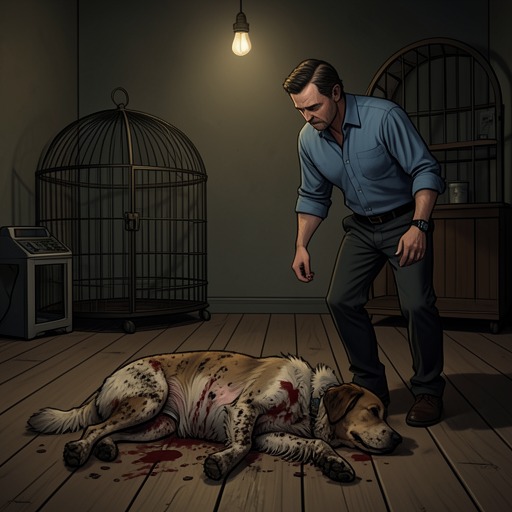
Cliff’s violence is not limited to fights that become public. He later attacked Buster Cooley inside Cliff’s trailer after Buster proposed using the injured Brandy’s undefeated reputation to bet against her in one final dogfight. They grappled for about four minutes before Cliff broke Buster’s neck. Cliff stayed beside the body until roughly two in the morning, then put it in the trunk of Buster’s used white 1965 Impala Sport Coupe. He abandoned the car in Compton with its keys in the sun visor, walked Brandy through the night, and took a bus with her back to Van Nuys at daybreak.
The killing was his third murder. His first had taken place in Cleveland; the second was the death of his wife, Billie. No one he knew brought Buster up again, and Cliff never learned what became of the body or the car. He had fought Brandy only twice since their last bout, when money was especially scarce, and then promised not to fight her again. His care for the dog does not erase what he has done, but it reveals a boundary he intends to keep even when Brandy cannot understand the promise.
Billie’s death is presented through a different, more complicated account. Cliff shot her with a shark gun, striking below the navel and tearing her body in two. He immediately understood that he had made a terrible mistake. He held her remains together, remorseful and frantic, and kept her alive for seven hours rather than leave her to call the Coast Guard. When rescuers tried to transfer her from the boat to the dock and an ambulance, she fell apart. Cliff maintained that the injury resulted from mishandled diving equipment. The authorities knew Billie had been drinking, but the stunt community interpreted that detail through its own knowledge of her public drunkenness and abuse of Cliff. Many believed he had deliberately killed her after she said too much. The account leaves the intention unresolved while making the damage, and Cliff’s attempt to care for her afterward, unmistakable.
Change, Loyalty, and Narrative Role
Cliff’s work abroad briefly restores his old professional function. During a rapid run of European films with Rick, he doubles him again for the fourth picture, Red Blood, Red Skin, being shot in Spain. Earlier productions included the Italian westerns Nebraska Jim and Kill Me Quick, Ringo, Said the Gringo, followed by the Athens-shot secret-agent film Operation Dyn-O-Mite. On the Spanish set, Cliff carries a deep cut above his eyebrow from a rifle butt; the wound begins bleeding again, and the swelling threatens his ability to work the next day. In his hotel room he pours room-temperature gin into a plastic cup and considers ice both for the injury and to make the drink look more like a cocktail. The modest details place his toughness alongside the precariousness of a working stuntman’s body.
Cliff’s practical manner also shapes the way he encounters people outside the film crew. While driving in Los Angeles, he spots the same hitchhiker for a third time that day, now alone at a bus stop on the corner of Riverside Drive and Hollywood Way. He recognizes the unlikely repetition and considers stopping because she is headed in his direction. The moment presents him not as a public hero or a professional stuntman, but as a man moving through the city with his familiar mixture of alertness, appetite, and opportunism.
The book’s central contrast is not between a good man and a bad one, but between the roles Cliff can reliably perform and the violence he has been able to conceal. He is Rick’s steady companion, a capable stuntman, a devoted caretaker of Brandy, and a veteran whose wartime courage is genuine. He is also a repeat killer whose wife’s death remains a subject of suspicion, and whose temper has cost him work. Rick’s confidence in him is practical and personal, not a public vindication. Cliff’s calm keeps Rick’s life running; the same calm makes his private acts of violence harder for others to see until the consequences are already irreversible.